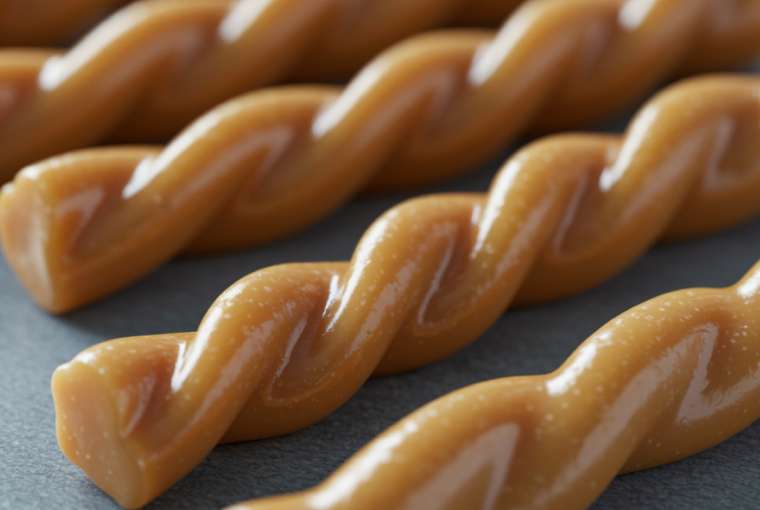
It was a Thursday afternoon. My dog, Juniper, had just finished her third training session of the week, and I was running low on high-value rewards. Store-bought liver treats were expensive—$12 for a tiny bag that lasted three days. The ingredient list was longer than my grocery receipt. “Liver,” then “flour,” then “glycerin,” then “preservatives,” then things I couldn’t pronounce.
I had a pound of chicken liver in my fridge. I had a little coconut oil, a splash of broth, and some turmeric for good measure. What if I made my own? Not just dried liver slices—but something softer, richer, more flavorful. Something with a little help from a few simple, dog-safe ingredients.
I blended the liver until smooth. I added a spoonful of coconut oil for healthy fats. A splash of broth for flavor. A pinch of turmeric for anti-inflammatory power. I spread the mixture onto a baking sheet and dehydrated it low and slow for three hours.
The result was a sheet of dark, chewy, intensely flavorful liver jerky—not too hard, not too soft, just right. Juniper sat by the oven door for the entire three hours. When I finally broke off a piece, she inhaled it. Then she looked at me like I’d just invented joy.
That was the day I stopped buying store-bought liver treats. Here’s how to make this easy, 4-ingredient, high-value liver jerky at home.
Why These 4 Ingredients Work Perfectly Together
1. Liver (Chicken or Beef):
-
High-value reward: Most dogs will do anything for liver. It’s smellier than peanut butter, richer than chicken.
-
Nutrient-dense: Packed with iron, vitamin A, B vitamins, and copper.
-
Natural binding: When blended, liver becomes a smooth paste that holds together beautifully.
The Honest Truth About Liver: Feed in small amounts. A little goes a long way. Too much liver can cause vitamin A toxicity or loose stool. 1-2 small pieces per day is plenty.
2. Coconut Oil:
-
Healthy fats: Supports skin and coat health.
-
Antibacterial properties: Lauric acid helps fight oral bacteria.
-
Binding: Helps the jerky hold together and stay moist.
-
Palatability: Dogs love the flavor.
3. Bone Broth (or Low-Sodium Broth):
-
Flavor: Intensifies the meaty taste.
-
Moisture: Helps create a spreadable paste.
-
Collagen: Supports joint health (if using bone broth).
-
Hydration: Adds liquid without empty calories.
4. Turmeric (Optional but Recommended):
-
Anti-inflammatory: Great for senior dogs or dogs with arthritis.
-
Antioxidant: Protects cells from damage.
-
Color: Creates a beautiful deep golden-brown jerky.
-
Flavor: Dogs don’t mind it; it’s mild.
The Golden Rule: A little liver goes a long way. These treats are potent. Break them into tiny pieces for training. One batch will last weeks.
The Recipe
Ingredients
| Ingredient | Amount | Notes |
|---|---|---|
| Chicken or beef liver | 1 pound | Fresh or thawed, rinsed |
| Coconut oil (melted) | 2 tablespoons | Unrefined, virgin |
| Bone broth (or low-sodium broth) | ¼ cup | No onion, no garlic, low sodium |
| Turmeric powder | 1 teaspoon | Optional, but recommended |
Yield
Approximately 3-4 ounces of finished jerky (about 30-40 training-sized pieces).
Prep time
10 minutes active. 2-3 hours dehydrating. Total: about 2.5 hours (mostly waiting).
Step-by-Step Instructions
Step 1: Preheat and Prepare
Preheat oven to 200°F (95°C) — or as low as your oven will go. If your oven has a dehydrate setting, use that at 150-170°F.
Line a baking sheet with parchment paper or a silicone baking mat. Do not use wax paper (it will smoke).
Step 2: Prepare the Liver
Place the liver in a colander. Rinse under cool running water.
Remove any visible:
-
Fat (white or yellow pieces)
-
Connective tissue (tough, stringy bits)
-
Veins (dark red lines)
Pat dry with paper towels. Excess moisture dilutes the flavor and affects texture.
Pro tip: Wear disposable gloves if you’re squeamish about handling raw liver. The smell can linger on your hands.
Step 3: Blend the Mixture
Place the prepared liver in a blender or food processor.
Add:
-
2 tablespoons melted coconut oil
-
¼ cup bone broth
-
1 teaspoon turmeric (if using)
Blend on high until completely smooth. This takes about 30-60 seconds. Scrape down the sides halfway through.
The texture test: The mixture should be a thick, pourable paste—like a smoothie or pancake batter. If it’s too thick, add 1 more tablespoon of broth. If it’s too thin, add 1 tablespoon of coconut flour or oat flour (not traditional, but works).
Pro tip: Blend in a well-ventilated area. Raw liver has a strong smell. Your dog will love it. Your human family members may have opinions.
Step 4: Spread on Baking Sheet
Pour the liver mixture onto the prepared baking sheet.
Use a spatula or the back of a spoon to spread it evenly into a thin, uniform layer.
Target thickness:
-
⅛ inch (3mm) for crispy jerky
-
¼ inch (6mm) for chewy jerky
Pro tip: For perfectly even thickness, place a piece of parchment paper on top of the mixture and roll with a rolling pin. Remove the top paper.
Step 5: Score the Jerky (Optional but Helpful)
Before baking, use a knife or pizza cutter to score the liver mixture into small squares or rectangles.
Why score? Scoring makes it easy to break the jerky into uniform pieces after drying. You won’t need a knife later—just snap along the scored lines.
Size guide:
-
Training treats: ½-inch squares
-
Everyday treats: 1-inch squares
-
Chew strips: ½-inch by 2-inch rectangles
Step 6: Dehydrate Low and Slow
Place the baking sheet in the preheated oven.
Baking time guide:
| Temperature | Time | Result |
|---|---|---|
| 170°F (dehydrate setting) | 2-3 hours | Chewy jerky |
| 200°F (low oven) | 2-2.5 hours | Firm jerky |
| 250°F (too hot) | 1 hour | Brittle, burnt edges (not recommended) |
Every hour: Check the jerky. It should be dry to the touch but still pliable (not crispy). If the edges are drying faster than the center, rotate the baking sheet.
How to tell they’re done:
-
Jerky is dry and leathery (not wet or sticky)
-
It peels easily off the parchment paper
-
It bends without breaking (for chewy jerky) or snaps cleanly (for crispy jerky)
-
The color is dark brown (not pink or raw-looking)
-
The smell is intensely meaty
Step 7: Cool Completely
Remove the baking sheet from the oven. Let the jerky cool on the sheet for 10 minutes.
Transfer the entire sheet of jerky (still on parchment) to a wire cooling rack. Cool for at least 30 minutes.
Do not skip this step. The jerky continues to dry as it cools. If you store it warm, trapped moisture leads to mold.
Step 8: Break into Pieces
If you scored the jerky before baking, simply snap along the scored lines.
If you didn’t score, use a knife or kitchen shears to cut the jerky into desired piece sizes.
Pro tip: For training treats, break into tiny pieces (¼ inch). You’ll get more pieces per batch, and your dog gets more rewards.
Storage & Shelf Life
| Storage Method | Duration | Instructions |
|---|---|---|
| Airtight container at room temperature (well-dried) | 2-3 weeks | Keep in a cool, dark cupboard |
| Refrigerator (airtight container) | 2-3 months | Best method for chewy jerky |
| Freezer (freezer-safe bag) | 6+ months | No thawing needed—serve frozen (extra chewy) |
Pro tip: If your jerky isn’t completely dry (still slightly pliable), always store in the refrigerator. Room temperature storage requires the jerky to be fully dehydrated (crispy, not bendable).
Signs of spoilage: Mold (white, green, or black fuzz), off smell (sour or rancid), slimy texture. When in doubt, throw it out.
Recipe Variations
Variation 1: Beef Liver & Bacon Jerky
Use beef liver instead of chicken liver. Add 2 tablespoons of crumbled cooked bacon to the blender. This version is richer, smokier, and even more irresistible. Higher in fat—feed smaller portions.
Variation 2: Liver & Parsley Jerky (Breath Freshener)
Add ¼ cup of fresh parsley (chopped) to the blender. Parsley is a natural breath freshener. The jerky will have tiny green flecks. Your dog’s breath will thank you.
Variation 3: Liver & Turmeric & Ginger (Anti-Inflammatory Powerhouse)
Add 1 teaspoon of turmeric and ½ teaspoon of ground ginger. Ginger settles upset stomachs and adds warmth. This version is great for senior dogs with arthritis.
Variation 4: Liver & Pumpkin Jerky (Digestive Health)
Add ¼ cup of canned pumpkin (pure) to the blender. Reduce broth to 2 tablespoons. Pumpkin adds fiber and a beautiful orange tint. The jerky will be slightly softer.
Variation 5: Liver & Apple Jerky (Sweet & Savory)
Add ¼ cup of unsweetened applesauce to the blender. Reduce broth to 2 tablespoons. Apple adds natural sweetness and a hint of fruity flavor. Dogs love this unexpected combination.
Variation 6: Dehydrator Method (No Oven)
Follow the same recipe. Spread the liver mixture onto dehydrator trays lined with non-stick sheets or parchment. Dehydrate at 165°F for 3-4 hours. Check at 3 hours. Dehydrator jerky is often chewier and more uniform.
Variation 7: Soft Liver Bites (For Seniors or Puppies)
Spread the mixture thicker (½ inch). Dehydrate for only 1.5-2 hours. The result is soft, almost pâté-like bites. Store in the refrigerator only (5-7 days). These are gentle on sensitive teeth and gums.
Variation 8: Liver Powder (For Sprinkling on Food)
Dehydrate the liver mixture until completely crispy and brittle (3-4 hours at 200°F). Break into pieces. Grind in a spice grinder or clean coffee grinder into a fine powder. Sprinkle ¼ teaspoon on your dog’s kibble as a natural flavor booster.
Training Tips Using Liver Jerky
Why liver jerky is the ultimate training treat:
| Feature | Benefit |
|---|---|
| Strong smell | Dog can smell it from across the room |
| Small size | You can give many rewards without overfeeding |
| Soft/chewy texture | Dog can eat it quickly and refocus on training |
| High value | Dog will work harder for liver than for biscuits |
| Easy to carry | Doesn’t crumble in your pocket or treat pouch |
How to use liver jerky in training:
-
Recall training: Reserve liver jerky ONLY for “come” commands. Your dog will come every single time.
-
Loose leash walking: Give a tiny piece every time your dog checks in with you or walks nicely.
-
New tricks: Use larger pieces for breakthrough moments (first time they offer a new behavior).
-
Reactive dogs: Use as a high-value distraction when passing triggers.
Portion guide for training:
-
Tiny dogs (under 10lbs): ¼-inch pieces (5-10 per training session)
-
Small dogs (10-25lbs): ½-inch pieces (5-10 per session)
-
Medium dogs (25-50lbs): ½-inch pieces (10-15 per session)
-
Large dogs (50+ lbs): 1-inch pieces (10-15 per session)
Troubleshooting Common Problems
| Problem | Likely Cause | Solution |
|---|---|---|
| Jerky is still wet after 3 hours | Mixture too thick or oven too cool | Spread thinner next time. Increase oven to 225°F for final hour |
| Jerky burned on edges | Oven too hot or spread too thin | Lower to 175°F next time. Check earlier (at 1.5 hours) |
| Jerky is brittle and crumbly | Over-dried or too thin | Reduce drying time next time. Spread thicker (¼ inch) |
| Jerky won’t come off parchment | Not dried enough or parchment quality | Dry longer. Next time, use a silicone baking mat instead |
| My dog ignores this | Impossible | Your dog might be sick. Check with your vet |
| Can I use beef liver instead? | Yes | Beef liver has a stronger flavor and higher fat content. Same recipe, same method |
| Can I add garlic or onion? | NO | Garlic and onion are toxic to dogs. Never add them |
Frequently Asked Questions
1. Is liver safe for dogs every day?
No, liver should be fed in moderation. Liver is high in vitamin A, which can cause toxicity if overfed. For a 30lb dog, 1-2 small liver treats per day (or 1 teaspoon of liver jerky) is safe. Too much liver can also cause loose stool. Use liver as a high-value reward, not a daily staple.
2. Can I use beef liver instead of chicken liver?
Yes. Beef liver has a stronger flavor and higher fat content. It is also slightly tougher. The same recipe and method work for both. Beef liver may take 30 minutes longer to dehydrate because of the higher fat content.
3. Can puppies eat liver jerky?
Yes, from 4 months old, in very small amounts. Cut the jerky into tiny, pea-sized pieces. Puppies have sensitive digestion—start with one tiny piece and wait 24 hours before offering more. Liver is rich and can cause loose stool if overfed.
4. How long does homemade liver jerky last?
Room temperature (well-dried): 2-3 weeks. Refrigerator: 2-3 months. Freezer: 6+ months. Always store in an airtight container. If your jerky is still slightly pliable (not crispy), store it in the refrigerator to prevent mold.
5. Can I make liver jerky without coconut oil?
Yes. Substitute coconut oil with olive oil, or omit it entirely. The jerky will be slightly less moist and may be more brittle. Add an extra 2 tablespoons of broth to compensate for moisture loss.
6. Why do I need to remove fat from the liver?
Fat does not dehydrate well. It becomes rancid faster than lean meat. Removing visible fat extends the shelf life of your jerky and creates a better texture. Fat also gives liver a stronger, less pleasant smell when dehydrated.
7. Can I add other vegetables to this recipe?
Yes. Safe additions include: finely grated carrot (adds sweetness), pureed pumpkin (adds fiber), or fresh parsley (adds breath-freshening). Keep the total add-ins under ¼ cup so the mixture remains spreadable. Do not add onions or garlic.
8. My jerky smells very strong. Is that normal?
Yes. Liver has a strong, distinct smell. When dehydrated, the smell concentrates. Your dog will love it. Your human family may need to open a window. To reduce smell, dehydrate at a lower temperature (165°F) for longer, or add 1 tablespoon of fresh parsley to the blender (parsley neutralizes odors).
Final Thoughts
The Thursday I made my first batch of 4-ingredient liver jerky, I didn’t just save money. I gained control. Control over what goes into my dog’s body. Control over the size, the texture, the flavor. Control over knowing that every single piece was made with love, not preservatives.
Juniper still does her happy dance when she sees me pull the liver jerky bag out of the fridge. She doesn’t know that coconut oil is good for her coat. She doesn’t know that turmeric fights inflammation. She knows that the dark, chewy, smelly pieces in my hand are the best thing she’s ever tasted—and that I’m the one who made them.
That’s the magic of homemade. You don’t need a dehydrator. You don’t need special equipment. You need liver, coconut oil, broth, and turmeric. You need an oven and a little patience. You need a dog who looks at you like you’re magic.
So rinse that liver. Fire up that blender. Spread that mixture. Your dog is waiting for something dark, chewy, and irresistible.
Now go make some liver magic.