
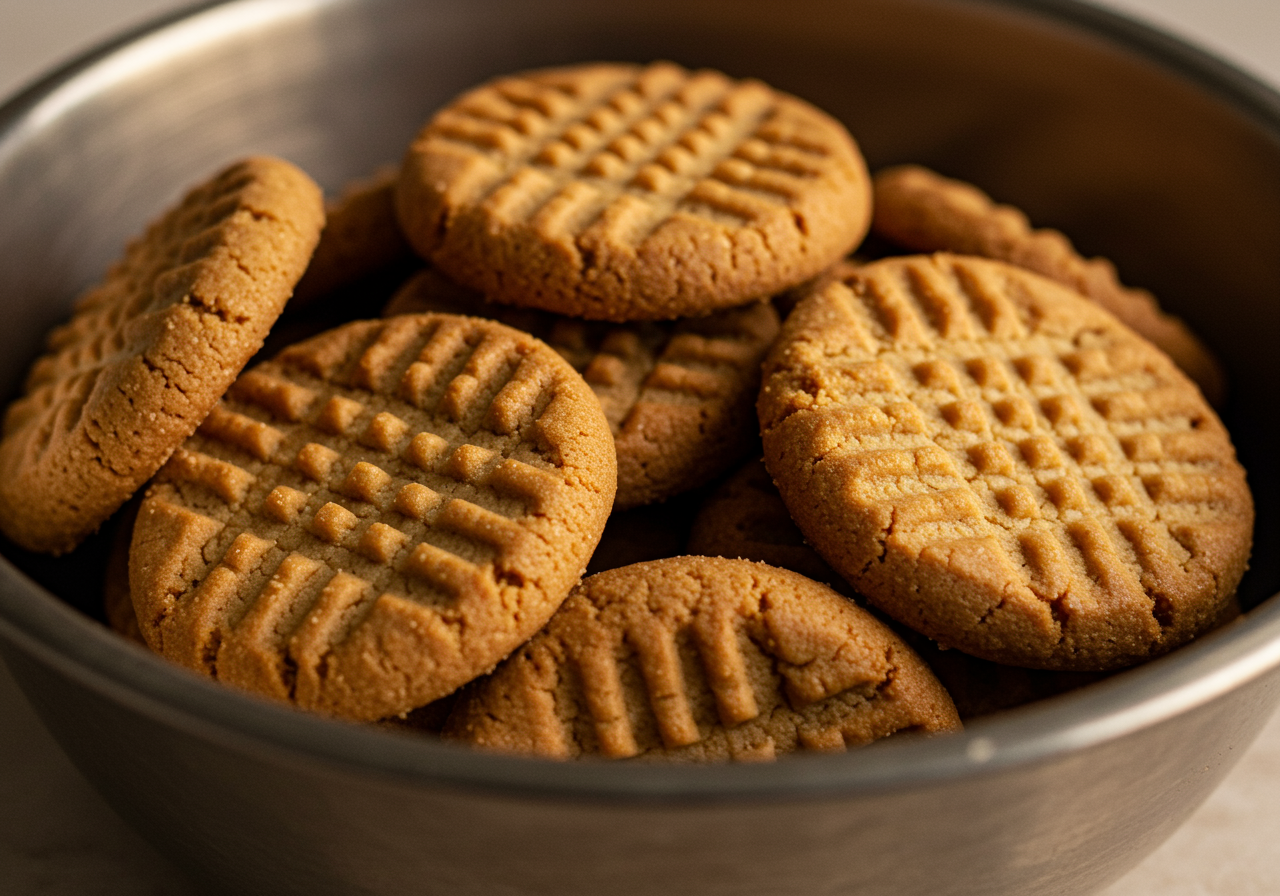
If you’ve ever wanted to make your dog a treat that’s simple, healthy, and full of love, these Peanut Butter Dog Cookies are the perfect solution. I know how tricky it can be to find a snack that’s both safe and nutritious, especially with so many store-bought options filled with fillers and preservatives. That’s why I love this recipe—just four wholesome ingredients and you’ve got a treat that your dog will go crazy for.
Why You’ll Love Making These Cookies
This recipe isn’t just quick and easy—it’s packed with ingredients that help support your dog’s health. Each bite provides:
Natural Energy from oats and flour to keep your pup active and happy.
Protein for Muscle Support, thanks to the peanut butter and egg.
Healthy Fats for a Shiny Coat, including omega-rich oils from the peanut butter.
One of my favorite things about these cookies is how practical they are. You probably have everything you need right in your pantry, which means no special shopping trips or complicated steps. And because it’s just four ingredients, you can even adjust the recipe to suit your dog’s dietary needs—whether that means swapping flours or using an alternative if your pup has allergies.
A Treat You Can Feel Good About
I think we can all agree that making homemade treats is more than just baking—it’s showing your dog how much you care. With these peanut butter cookies, you’ll have a snack that’s free from artificial flavors, unnecessary sugar, or anything that could upset your dog’s stomach.
And the best part? Your dog will be watching the oven with that “Is it ready yet?” look the entire time, and seeing their excitement makes it all worthwhile.
Recipe: 4 Ingredient Peanut Butter Dog Cookies
Prep and Cook Time
Prep Time: 10 minutes
Cook Time: 20 minutes
Total Time: 30 minutes
If your dog is already giving you that “treat, please!” face, don’t worry—this recipe is quick enough to whip up in half an hour. By the time the smell of peanut butter drifts through your kitchen, your pup will probably be sitting right by the oven, waiting for the first bite!
Tools You’ll Need
Before we start, let’s make sure you’ve got everything ready:
Mixing bowl: Big enough to stir all the ingredients together.
Spoon or spatula: To mix your dough without a mess.
Baking sheet: Lined with parchment paper or a silicone baking mat for easy cleanup.
Cookie cutters (optional): Fun shapes are always a hit, but a simple round cutter—or even hand-formed cookies—works perfectly.
Rolling pin (optional): If you want evenly rolled cookies for that classic look.
Fork: Great for pressing the dough slightly before baking and giving the cookies a nice texture.
Ingredients You’ll Need
These cookies only require four simple ingredients, and chances are you already have them in your kitchen:
1 ¾ cups old-fashioned rolled oats
½ medium to large ripe banana, mashed until smooth
¼ cup natural peanut butter (unsweetened and xylitol-free)
1 large egg
That’s it! With just these few ingredients, you’re about to make a homemade treat that’s healthy, tasty, and tail-wag approved.
How to Make 4-Ingredient Peanut Butter Dog Cookies Step by Step
Baking these dog cookies is easy and fun, and the best part is seeing your pup wagging their tail while you work. Here’s how I make them from start to finish:
Step 1: Preheat the Oven
First things first, set your oven to 350°F (175°C). Letting the oven preheat ensures that your cookies bake evenly and get that perfect texture—crispy on the outside, soft on the inside.
Step 2: Mix the Wet Ingredients
In a large mixing bowl, mash your ripe banana until it’s as smooth as possible. A few small lumps are okay. Then add the peanut butter and egg, mixing until the mixture is creamy and fully combined. This will be the tasty base for your cookies.
Step 3: Add the Oats
Slowly add your rolled oats into the wet mixture, stirring until everything comes together. The dough might feel sticky at first—don’t worry! You can let it rest for 5–10 minutes to let the oats soak up some moisture. If it’s still too sticky to handle, add a bit more oats, one spoonful at a time, until the dough holds its shape.
Step 4: Shape the Cookies
Scoop about 1 tablespoon of dough for each cookie and roll it into a ball. Place it on your baking sheet and gently flatten it with a fork. If you want to make them extra cute, you can roll the dough out to about ¼ inch thick and use cookie cutters for fun shapes.
Step 5: Bake to Perfection
Arrange the cookies on a parchment-lined baking sheet with a little space between each one. Bake for 12–15 minutes, or until the edges are golden and the cookies feel firm. Keep an eye on them, because baking time can vary depending on your oven and the thickness of your cookies.
Step 6: Cool Before Serving
Once they’re done, let the cookies cool completely on a wire rack. I know your dog will be circling the kitchen, but patience is key—this keeps the treats safe to eat and helps them firm up nicely.
How to Serve Peanut Butter Dog Cookies
When it comes to treats, portion size really depends on your dog’s size, activity level, and overall diet. I always like to remind myself that treats are meant to be a little bonus, not a full meal. Here’s a simple guide for serving:
Small dogs (under 10 lbs): 1 cookie per day is plenty.
Medium dogs (10–30 lbs): 1–2 cookies per day.
Large dogs (30+ lbs): 2–3 cookies per day.
It’s always smart to keep your dog’s total calories in mind, especially if they’re prone to weight gain. Treats are fun, but they should only make up a small part of a balanced diet.
Nutritional Benefits
These cookies aren’t just a quick snack—they actually pack some great health benefits for your pup:
Protein Boost: The peanut butter and egg help support muscle strength and give your dog long-lasting energy.
Healthy Fats: Peanut butter is rich in good fats, including omega-3s, which help with a shiny coat and brain health.
Energy from Carbs: The oats provide slow-burning carbohydrates to keep your dog active and energized.
Fiber for Digestion: Oats also bring a little fiber to the mix, which can help keep your dog’s digestion smooth and keep them feeling satisfied.
On average, each cookie contains about 60–80 calories, depending on the size.
Storing Your Homemade Dog Cookies
To keep these treats fresh, I like to let them cool completely and then store them in an airtight container. If I’ve made a big batch, I pop some in the fridge to keep them fresh for longer. For long-term storage, freezing works perfectly—just let them thaw before serving.
Room Temperature: 5–7 days
Refrigerator: Up to 2 weeks
Freezer: Up to 3 months
Tips for Making the Best Cookies Every Time
For softer cookies: Use almond flour instead of oats for a slightly more tender texture.
For a special touch: Once cooled, you can drizzle dog-safe yogurt or coconut oil over the top for a fun “frosted” cookie.
For flavor variety: Add a spoonful of mashed banana or pumpkin puree to the dough for natural sweetness dogs love.
Safety Notes
I always remind dog owners (myself included) that even homemade treats need a little bit of caution. While these cookies are safe for most dogs, every dog is unique. Before introducing any new treat, it’s smart to think about possible food sensitivities.
If your dog has peanut allergies, don’t worry—you can still make this recipe! A simple swap with sunflower seed butter or unsweetened almond butter works perfectly, as long as it’s completely xylitol-free. Xylitol is toxic to dogs, so always double-check your labels.
Safe Ingredient Swaps
One of the things I love about this recipe is how flexible it is. If you need to make adjustments, here are some easy swaps:
Peanut Butter: Replace with sunflower seed butter or almond butter if peanuts are off-limits.
Oats: If your dog is sensitive to oats, try using rice flour or chickpea flour instead.
Banana (Optional): If your dog can’t have banana, a spoonful of pumpkin puree works just as well for moisture and mild sweetness.
These adjustments make it easy to tailor the recipe to your dog’s dietary needs without losing that delicious homemade goodness.
Health Benefits of the Main Ingredients
Every ingredient in these cookies isn’t just tasty—it brings something valuable to your dog’s health:
Peanut Butter: A powerhouse of protein and healthy fats that help keep your dog’s coat shiny, support brain health, and give them steady energy.
Oats: Gentle on the stomach and packed with fiber, oats support digestion and help regulate energy levels.
Egg: A great source of protein, vitamins, and minerals that aid muscle development and overall wellness.
Oat Flour: A gluten-free, nutrient-rich option that’s easy to digest while adding a soft texture to the cookies.
With this mix of ingredients, these cookies are more than just a treat—they’re a bite-sized boost for your dog’s health.
Why These Ingredients Are Perfect for Your Dog
When I make treats for my dog, I always think about more than just flavor—I want every bite to be safe, healthy, and beneficial. The ingredients in these peanut butter dog cookies aren’t just random; each one has a purpose for your pup’s health and happiness. Here’s why they work so well:
Peanut Butter
Peanut butter is the hero of this recipe. It’s packed with protein and healthy fats that keep your dog’s energy steady and their coat soft and shiny. It also carries essential vitamins like B and E, which support brain function and boost their immune system. The key is to choose natural peanut butter without xylitol or added sugars, because xylitol is toxic for dogs and even a tiny amount can be harmful.
Oats
I love using oats in dog treats because they’re gentle on the stomach and full of fiber. Fiber keeps digestion smooth, helps regulate bowel movements, and can even make your dog feel fuller for longer—perfect if your pup needs to manage their weight. Plus, oats are rich in antioxidants that help reduce inflammation and support overall wellness.
Egg
Eggs are a tiny superfood for dogs. They provide high-quality, easily digestible protein and amino acids that support muscle growth and tissue repair. Eggs also help with healthy skin and a shiny coat, making them an all-around win for your dog’s diet.
Oat Flour
I often reach for oat flour because it’s gentle, gluten-free, and easier on sensitive stomachs than wheat flours. It adds structure to the cookies without upsetting digestion, and its natural fiber helps stabilize blood sugar levels—a bonus for dogs who need a little extra dietary balance.
By combining these simple ingredients, you’re giving your dog more than just a snack—you’re offering a treat that supports digestion, energy, and overall health. Best of all, it’s made with real, wholesome ingredients you can trust.
Dietary Suitability
One thing I love about this peanut butter dog cookie recipe is how adaptable it is. Not every dog has the same dietary needs, and with a few small tweaks, you can make these treats work for almost any pup:
Low-Fat Option
If your dog needs a lighter treat, you can swap the regular peanut butter for a low-fat version. Just remember to check the label to make sure it’s xylitol-free. Sunflower butter is another good alternative for a lower-fat option that’s still creamy and tasty.
Grain-Free Option
For dogs with grain sensitivities or if you prefer to avoid grains, you can replace oat flour with chickpea flour or almond flour. Both will keep the cookies firm and healthy without upsetting sensitive stomachs.
Hypoallergenic Option
If your dog has food sensitivities, consider switching to almond or sunflower butter instead of peanut butter. Pair that with chickpea or rice flour in place of oat flour, and you’ll have a treat that’s much gentler for dogs with allergies.
No matter which version you choose, the key is to know your dog’s dietary needs. If you’re unsure about any ingredient, a quick chat with your vet can help you feel confident about what you’re feeding your pup.
Troubleshooting: Fixing Common Issues
Even with simple recipes, things can go sideways in the kitchen—and that’s completely normal. If your dog cookies didn’t turn out the way you expected, here are a few ways to fix it next time:
Dough Too Sticky
If the dough feels sticky and hard to shape, sprinkle in a little more oat flour until it firms up. You can also pop the dough in the fridge for 15–20 minutes; chilled dough is much easier to handle.
Cookies Too Hard
If your cookies turned out crunchier than your dog likes, it probably means they baked a bit too long. Check them a few minutes earlier next time, around the 18-minute mark, for a softer texture.
Cookie Shapes Didn’t Hold
If your cookies spread or lost their shape while baking, it helps to chill the dough before shaping. Pressing the dough gently with a fork before baking also helps maintain a consistent look.
Little adjustments like these can make a big difference, and soon your homemade treats will come out perfect every time!
Health Concerns to Keep in Mind
Even though this recipe uses safe, dog-friendly ingredients, it’s always a good idea to stay mindful of a few health considerations.
Peanut Butter
Use natural, unsweetened peanut butter only. Many commercial brands add sugar or, worse, xylitol—a sweetener that is highly toxic to dogs, even in small amounts. Always read the label before using.
Eggs
Raw eggs can carry a risk of salmonella, so always make sure the eggs in your treats are fully cooked. This not only makes the treats safe but also easier for your dog to digest.
Portion Control
Healthy doesn’t mean unlimited. These cookies are meant as occasional treats, not meal replacements. Giving too many could lead to stomach upset or unnecessary weight gain.
If your dog has allergies, digestive issues, or any chronic health conditions, checking with your vet before introducing new treats is always the safest approach.
How Affordable Is This Recipe?
Making your own dog treats is often cheaper than buying pre-made ones. Most of the ingredients in this recipe are pantry staples you may already have.
Peanut butter: Around $3–$5 per jar, and one jar lasts for several batches.
Oats: About $2–$3 per bag and will last multiple recipes.
Eggs: Roughly $2–$3 per dozen.
Oat flour: Around $4–$5 per bag—or make your own by blending rolled oats at home.
On average, a whole batch of cookies costs less than $5, which is far more budget-friendly than store-bought dog treats.
Convenience: Quick and Simple
This recipe is perfect for busy dog owners because it only takes about 10 minutes to prepare and 20 minutes to bake. There’s no fancy equipment required—just a mixing bowl, a spoon, and a baking sheet.
While the cookies bake, your dog will probably sit nearby, watching every move you make and waiting for that first bite. The simplicity and speed make these treats ideal for those spontaneous “I want to bake something for my pup today” moments.
Will All Dogs Like This Recipe?
Most dogs can’t resist peanut butter, so there’s a good chance your pup will love these cookies right away. Oats are also gentle on the stomach, making these treats suitable for most breeds.
That said, dogs can be picky. If your dog seems hesitant, break off a tiny piece as a sample. If peanut butter isn’t their favorite, sunflower or almond butter can be great alternatives.
Best Cooking Method
Baking at a moderate 350°F (175°C) for about 20 minutes gives these cookies the perfect balance of firmness and crunch. They should be golden and firm to the touch when done.
If you want to extend their shelf life or create an extra-crunchy texture, you can dehydrate the cookies after baking at a very low temperature. But for most people, simple baking is the safest and easiest method.
Portion Control: How Much Is Too Much?
Moderation is the golden rule. These cookies are healthy but should only supplement your dog’s diet. A good guide is:
Small dogs: 1 cookie per day
Medium dogs: 1–2 cookies per day
Large dogs: 2–3 cookies per day
If you use them for training, keep in mind that extra treats mean extra calories. Balance treats with your dog’s regular meals to prevent weight gain.
Serving Suggestion
These cookies make excellent training rewards or after-walk treats. I like to give one after a fun outdoor session or when my dog nails a training command. They’re a simple, loving way to reward your pup without compromising their nutrition.
Frequently Asked Questions (FAQ)
1. Can I use a different type of flour instead of oat flour?
Yes! If your dog tolerates other flours well, you can use chickpea flour, rice flour, or almond flour. Just keep in mind that each flour absorbs moisture differently, so you may need to adjust the amount slightly to get a workable dough.
2. Is it safe to give these cookies to puppies?
Yes, but in moderation. Puppies have smaller stomachs and different nutritional needs, so give only small pieces as a treat, and make sure the ingredients fit within their regular diet.
3. Can I freeze these cookies for later use?
Absolutely! After baking and cooling, store the cookies in a freezer-safe container for up to 3 months. When your dog is ready for a treat, just thaw one at room temperature or in the fridge before serving.
4. How do I know if my dog is allergic to any of the ingredients?
The safest way is to introduce new treats slowly. Offer a small piece first and observe your dog for any signs of itching, stomach upset, or unusual behavior. If your dog has a history of allergies, consult your vet before trying new recipes.
5. Can I add extra flavors like pumpkin or sweet potato?
Definitely! Small amounts of mashed pumpkin, sweet potato, or even a sprinkle of cinnamon (in moderation) can boost the flavor and nutrition of these cookies. Just avoid any ingredients that are toxic to dogs, like chocolate, raisins, or nutmeg.
Conclusion
And there you have it—simple, homemade 4-Ingredient Peanut Butter Dog Cookies that your furry friend will love and you’ll feel great about making. They’re quick, healthy, and budget-friendly, turning ordinary pantry ingredients into something special for your dog.
Making treats like this is more than just baking—it’s about spending a little time to create something that shows your dog how much you care. The wagging tail, happy eyes, and excitement when they bite into these cookies make every minute in the kitchen worth it.
If you decide to try this recipe, I’d love to hear how your dog enjoys them. Share your experience or even a fun photo of your pup with their new favorite cookie. Here’s to happy baking and even happier dogs!